


Update: In July 2025 a new US budget bill was signed into law which eliminates the solar tax credit for home owners after December 31st 2025.
The US government in 2005, under president George W. Bush, a republican, created the Investment Tax Credit (ITC) with the goal of subside investments in renewable energy and jump start America’s transition to clean energy. The law was called the Energy Policy Act of 2005. It was limited in scope and had significant restrictions. It was originally scheduled to expired in 2007 but, since its creation, it has been extended, modified and increase in scope. The latest update and expansion was added to the Inflation Reduction Act of 2022. As that legislation was signed into law, it created the single biggest investment on renewables in the history of the US and the world.
The ITC has been beneficial to Americans in several ways, from creating whole industries and thousands of new jobs to making solar systems affordable to home owners and businesses. In this article we will address one subset of the ITC and that is the home owner’s income tax credit. In a separate post we will talk about the business revenue tax credit and related incentives like accelerated depreciation and production credit.
The Inflation Reduction Act of 2022 increased the ITC from 26% of the cost of a solar system for a homeowner to now 30% of the total cost of installation. And it also added provisions for electrical upgrades needed for solar installations, for example wiring and load panels updates. Additionally, it removed the limitation of having a renewable source of energy charging batteries in order for those battery to qualify of the ITC. In other words, batteries charged from the grid now qualify for the same 30% tax credit. The law extended the ITC until the year 2033 when the percentage of tax credit is reduced to 26%. And in subsequent years it is reduced even more until it disappears altogether.
What is the ITC? and what it isn’t
The ITC for an individual is a one-for-one reduction of income tax liability equal to 30% of the cost of the solar PV system. It is subtracted from a tax payer’s tax debt after the tax is calculated. In order to take advantage of it the individual must have a tax liability, in other words, you must pay taxes. Thus, persons with no income, retired, disabled or for whatever condition without income tax obligation would not be able to claim the tax credit.
The 30% investment tax credit does not have a limit for home owners. The bigger the system the bigger the tax credit. Additionally, it can be carried forward until 2033. If your tax liability is lower that your tax credit you apply part of the ITC to the first year after the system installation and the remaining ITC is applied in subsequent years until it is claimed completely.
What the ITC isn’t. The ITC is not a deduction, which is applied into the tax calculation by reducing total income, and thus, reducing tax liability. The ITC is also not a rebate, which is paid back by the government to the individual if there is no tax liability. In other words, the federal government will NOT send you a check for going solar, despite all the video ads you have seen stating the contrary.
How does the ITC work?
The ITC is calculated and applied to the tax payer’s tax filling the year following the solar system installation and commissioning. It can be claimed for primary residence or vacation home but not for rental (investment) properties. It does not matter if your home is a mobile home, a boat, a recreational vehicle or a tree house as long as it is your primary residence and it is located within the US borders.
The ITC is calculated as 30% of the cost of installation which includes parts, labor, permits, design, electrical upgrades, energy storage (batteries), wiring, disconnects (automatic or manual) and accessories. Unfortunately, if your roof structure needs to be upgraded to support the weight of the panels or if your roof surface needs to be replaced before installing the panels, that cost is not allowed in the ITC calculations.
For those who financed the solar installation with a loan, most lenders today allow a one-time re-amortization of the solar loan within the first eighteen months of the loan. This will basically reduce your loan balance under the same terms, interest (APR) and number of payments, which reduces the monthly payments for the rest of the life of the loan. That is assuming that you use the ITC savings to make a one-time payment against the loan and not take a vacation or use it for something else, i.e., paying a high interest rate credit card balance.
It is important to check with your solar lender about the re-amortization option, or at least how they handle the ITC payment. A few lenders set up two loans one for eighteen months equal to the ITC and another for the rest of the loan. If the ITC loan is not paid-off at the eighteenth month mark then the balanced is rolled into the main loan with new terms (unfavorable terms).
Additional ITC restrictions
It is worth mentioning the following two restrictions, just in case that it’s not already known:
Another very important qualification for the ITC is that it can only be claimed by the system’s owner, whether it is a cash purchase or a solar loan. For that reason, solar leases or Power Purchase Agreements (PPA) do not benefit the homeowner. In those instances, the company that leased the system to you is the one claiming the ITC.
Equally important is that only first owner of the solar system get to claim the ITC. Let’s say that you have a contract to build a new house and the builder offered you a solar PV system included with the house; then to the IRS, the builder is the first owner of the solar system and you can’t claim the ITC. There is lots of controversy with that specific example and some builders are lobbying to make an exception on new homes. A better example is buying a house which had a solar system installed by the previous homeowner two years ago. Equally, the ITC is used up and you only get the benefit of having a house with a system already installed.
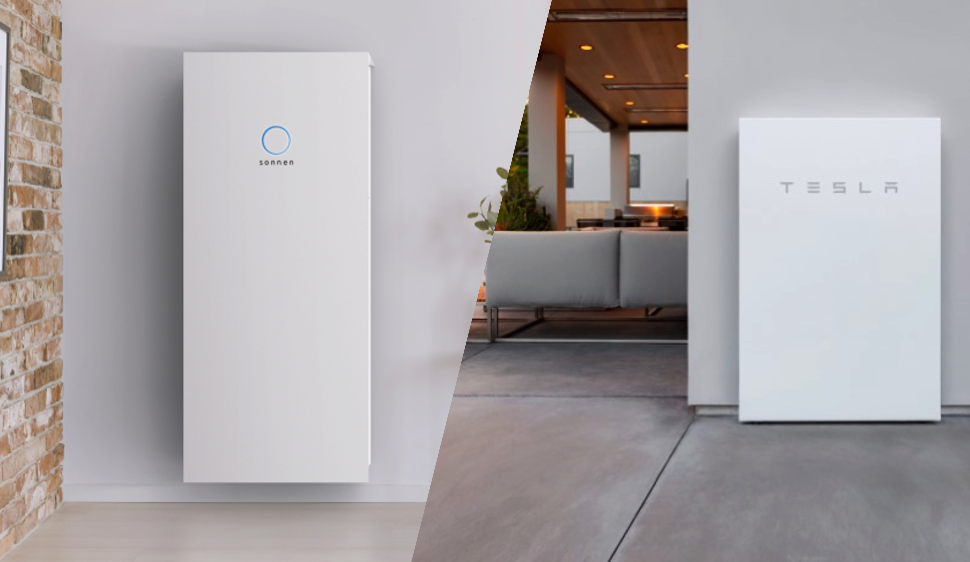
On the topic of Energy Storage System (ESS) or home batteries, these have the same restrictions as solar PV, i.e, ownership and first owner. There is also one requirement that applies to ESS and that is it needs to have a capacity of 3KWh or grater for individuals and 5KWh or more for businesses. It seems irrelevant since most ESS in the market today are 10KWh or bigger but, it is intended to rule out DIY home batteries.
Lastly, a disclaimer
We at Venti Tech Solar are energy experts instead of financial experts. The information provided here is not to be consider a financial advice. We recommend in all cases that our customers consult with their accountant and financial advisers for accurate and updated information that applies to their situation.
For additional information visit the IRS Home energy Credits page.


