


For some people the main reason is reducing their carbon footprint. For other others the investment is too good to pass on. There is also the need to gain independence and protection from the power grid. In February of 2021 the Texas independent and deregulated power grid faced a weather event that demonstrated how vulnerable it is. During more than three days the grid was unable to meet power demands and initiated a series of rolling blackouts to shed loads in order to deliver the little available power.
The wake-up call caused by the winter storm triggered a series of upgrades to the power generation plants and transmission systems. Most of the gas lines and other equipment were winterized. The added expense was eventually added to the wholesale price of electricity and the local electric companies passed it along to the individual consumers. The net results were consumer electric bill increases of 20% to 40%. Such electricity cost increases were never seen before in Texas. Reducing the electric bill is one good reason to add solar to your home or business.
Meet 90% or more of your electric needs
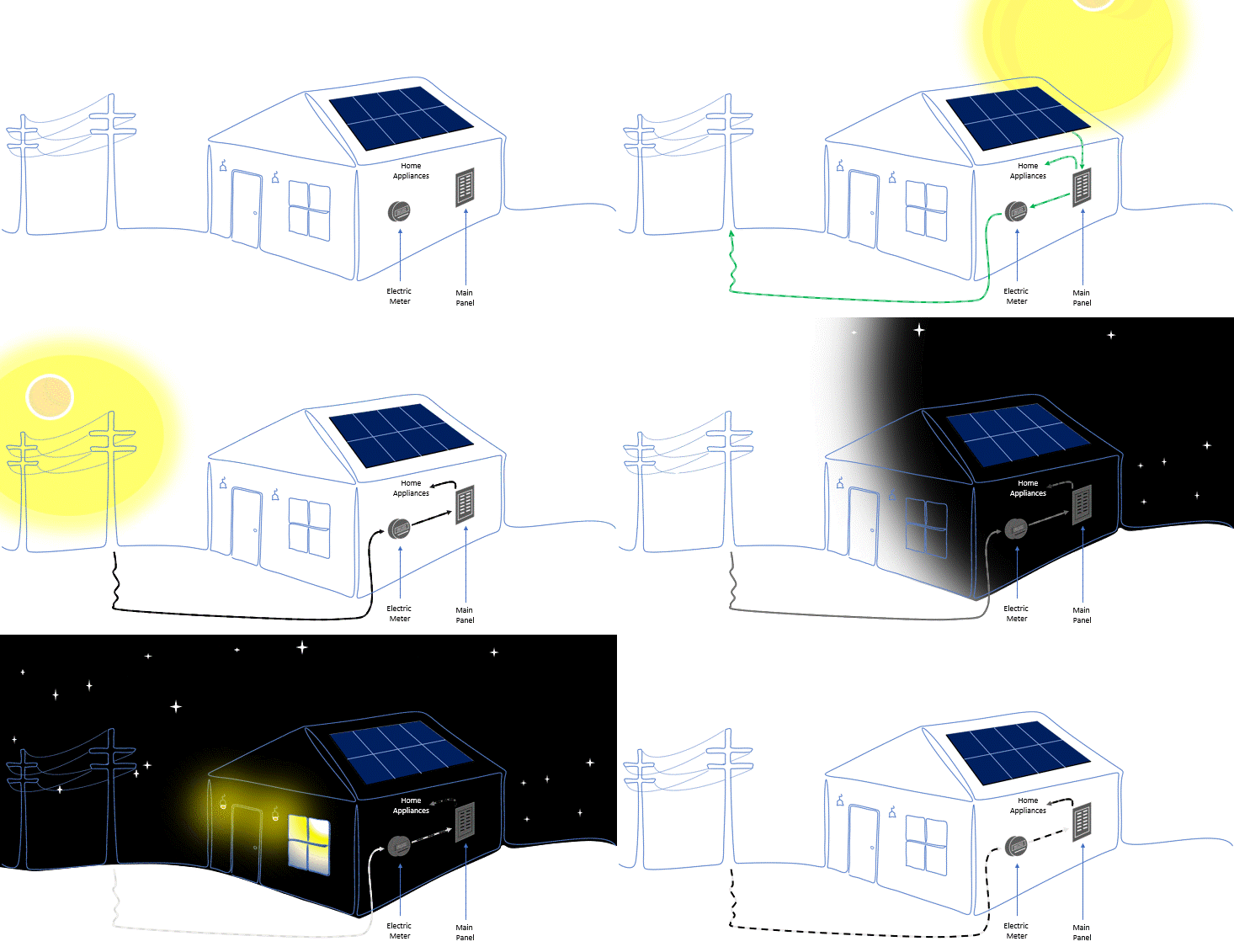
A professionally designed system can meet most consumers’ electric need. The grid tied PV system where the electric grid acts as a battery is the simplest and most cost-efficient way to add solar production to your home or business.
With this system the generated power satisfies the consumer’s power needs when the sun is bright, and the extra generated power is sent to the grid by running the electric meter backwards. During the night the grid satisfies the needs of the consumer. In perfect conditions this back-and-forth exchange of KWh will result on zero electric consumption or a zero electric bill at the end of the month. This is called net-meeting.
Since nothing is perfect 100% of the time, there will be some months when the PV system would produce less than the home or business uses, and the grid will provide the rest. This is typically during the winter months when there is less sun light. In these conditions the customer will receive an electric bill.
Be aware of solar sales rep that promise no electric bill. That only means that you will get an oversized system, or they don’t know what they are selling.
Take advantage of the 30% federal tax credit
This is a big one and gets all the attention. With the recently signed Inflation Reduction Act of 2022, the renewable tax credit has been increased to 30% of the total cost of the PV system. Before the signing of the IRA 2022 the tax credit was of 26% for 2022, further reduced to 22% in 2023 and totally disappeared in 2024. The new law keeps the 30% tax credit until the year 2034 and it also include the cost of batteries attached to the PV system.
The tax credit is applied directly to the PV system owner’s tax liability, cutting this much from the amount of taxes owed that year. If the tax liability for that year is not enough to cover the total credit then the left over can be carried forward and applied to the following year taxes until the 30% credit is used.
For example, if your turnkey grid tied PV system costed $15,000 you can apply $4,500 as a renewable energy credit when you file your taxes the following year. If your tax liability before the PV system was installed was $6,000, with your new PV system you will owe: $6,000 – $4,500 = $1,500.
In essence, the US government is paying for 30% of your PV system or $4,500 in this example case.
It is important to note that if you have no tax liability for any reason or if the system ownership is not yours then you would not be able to take advantage of the tax credit. For example, in solar PV system leases the system is owned by the leasing company. This is also the case of Power Purchase Agreements (PPA). It is important to recognize a solar loan from a solar lease.
Add value to your home without increasing property taxes
In most cases, the addition of a solar PV system to a home increases the value of the home. The estimate of the added value varies from between 2% to 5%. The increase value, more often, is greater than the cost of the system itself after tax credit and local incentives. In other words, the value of the investment is greater than its cost.
It is a common reservation of potential customer committing to a 20-year solar loan when the average homeowner moves every 7 years. Here is where the investment part of the PV system comes into play. The value of the investment is the same whether you keep it for 20 or for 2 years. If the homeowner needs to sell the house the added value is recovered, sometimes for a profit, to then settle the solar loan. This is not the case for solar leases or PPA (Power Purchase Agreements) plans. Solar leases and PPA are not an investment. Although, they are still a way to reduce carbon footprint and help the environment.
The other side of the investment coin is in property taxes. In Texas and other states, there are laws in effect that keep the local tax authorities from using the added value of the PV system in the calculation of the homeowner’s property tax liability. For them the PV system doesn’t exist.
We encourage our customer to consult with their financial adviser and real estate agent since everyone’s case is different.
Take control of your electricity cost
Venti Tech Solar doesn’t offer solar leases or PPAs. Although these are viable forms of reducing your carbon footprint, we believe that solar loans present the greatest benefit to the customer. And most customer can be approved for a solar loan with no down payment, which is the reason for a solar lease or PPA.
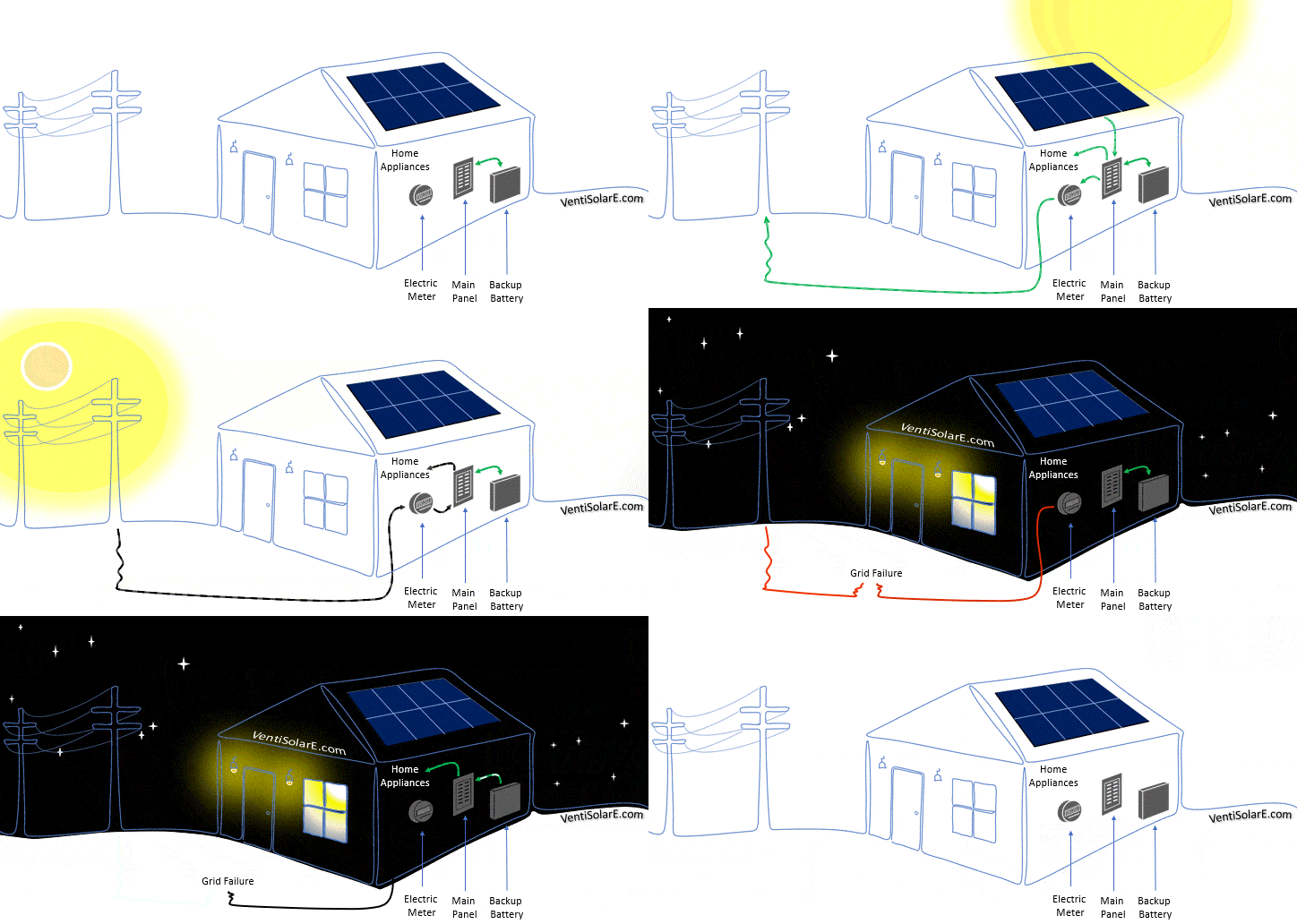
The main advantage of a solar loan is that the terms are fixed to a certain monthly payment, unlike PPA or solar leases which often include payment increases. A solar loan can be customized to a monthly payment that is equal or less of the customer’s current electricity bill. This is a factor or the length of the terms, the interest rate and applicable lender costs. Since the solar PV system will reduce the amount of grid power consumed, then the electric bill will also be reduced, or it will be zero on most months. Thus, the variable portion of the monthly electric cost is reduced in favor of a fixed solar loan payment.
In ideal conditions, the solar PV system will generate 90% of the customer’s annual electric needs and the solar loan payment will be equal or less than 90% of the electric bill before solar PV was installed. This is not always the case, depending on the solar system size/cost and the expected power production given the roof pitch, orientation and shade elements. In other circumstances, the customer could opt to pay the solar loan in shorter terms by increasing the monthly payments beyond the pre-solar electric bill. Once the system is paid off the remaining smaller electric bill of those few months of the year is all that is left to pay for electric power.


