


As recent as ten years ago, there were few choices available to keep the lights on and the refrigerator cool when natural disasters stroke. Whether it is a tornado, a fire, a hurricane or, the latest addition, the Texas grid, can leave you in the dark for a few hours or a few days. Back then you could use a portable gas generator or a standby generator. The later is installed permanently and start automatically when the grid fails, mostly. That was it, only two choices. Now Texans have a multitude of Energy Storage system (ESS) options apart from fuel generators. These ESS use a big bank of lithium batteries and intelligent programing to do all sort of things apart from providing backup power.
The backup power landscape has changed and one company in particular took notice. It happens to be the company that commands 70% of market share on standby generators in the US. The indisputable leader in this market is GENERAC. Since 2016, GENERAC has made massive investments in the Energy Storage Systems (ESS) market. Which is a consequence of being highly tunned to its market rather than out of panic from the success of Tesla’s Powerwall launch, if you know what I mean.
In 2019 GENERAC acquired Pika Energy Inc., a manufacturer of solar inverters and battery systems, later rebranding their battery system as PWRCell. The same year, it also acquired Neurio Technology Inc., which is a home energy monitoring, analytics and optimization company. Then, two years later, GENERAC also bought a company based in UK called Off Grid Energy Ltd, which plays in the industrial scale energy storage market. That is just to name a few of its investments.
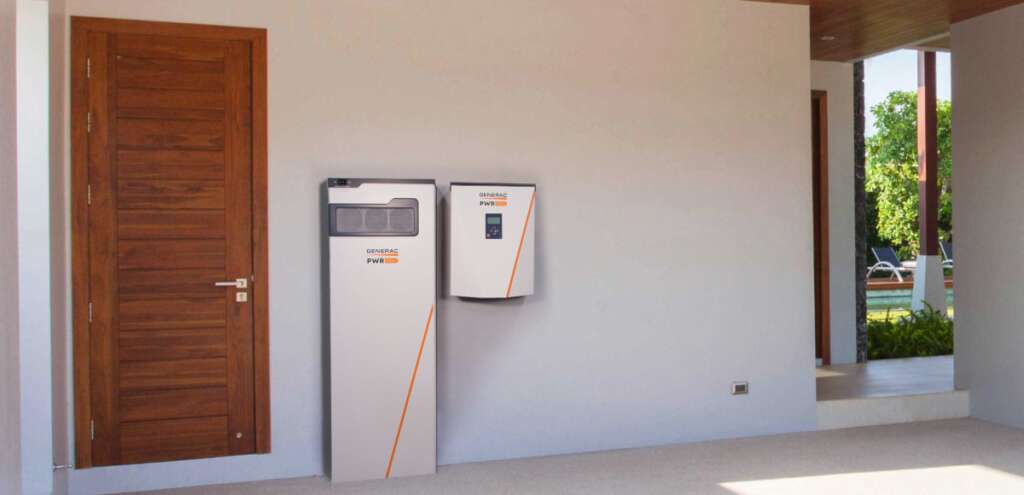
The image below is the former Pika Energy Inc. ESS rebranded as a GENERAC product.
Government and utilities incentives
There are several factors for the increase of Energy Storage Systems adoption over standby generators. One being the mainstream adoption of clean energy and the other is the massive government incentives towards energy efficiency which does not include standby generators using fossil fuel for energy.
With the latest update to the Investment Tax Credit added to the Inflation Reduction Act of 2022, standalone batteries were added to the list of qualified products at 30% of the installed cost. Previously, home batteries would only qualify if these were attached to a renewable energy source and the credit was 26%, which is at the federal level. At the state and utility level there are more incentives in the form of rebates instead of tax credits.
In the short term, standby generators are economical compared to the upfront cost of home batteries but, factoring total cost of ownership the savings are minimal. Generators require regular maintenance in order to keep them in good operation. Lack of regular maintenance leads to poor performance and failures when they are most needed. ESS do not require maintenance. Apart from that, the fuel used by generators is five to ten times more costly than electricity. And if your energy storage system is paired with a solar PV array then energy could be free. Furthermore, if the ESS is installed between 2023 and 2034, not only the cost of the unit but also its fuel, i.e., Electricity generation, qualifies for a 30% tax credit. To learn about the ITC credit visit the Tax credit explained article.
Ease of use
One force acting on the market is convenience. The use of home batteries is far more convenient than using generators, no question asked. The new customer of backup power systems is more sophisticated. With an ESS, the user would not need to drive to a gas station for diesel / gasoline or, store propane in a tank in order to keep the standby generator running. In short power outages the batteries will last from a few hours to several days depending on how much they are used, and if paired with solar this time may be unlimited.
The number one complain with standby generators is not the need of purchasing fuel or the regular maintenance required, it is the noise. These units make a lot of noise when running. ESS, on the other hand, produce no sound, so you and your neighbors can sleep quietly when the grid is down.
In cases where the ESS is used to backup the whole home, as supposed to essential appliances, during power outages, the switch over from grid to ESS is instantaneous, counted in milliseconds. At such speed, appliances do not perceive the change and home owners only know by receiving a notification in their cellphones from the ESS that there was switchover event. That is the pinnacle of convenience.
Transition to clean energy
Another factor changing the standby power landscape is the transition to clean, renewable energy. ESS are considered clean or less polluting than standby generator because of the fuel used, even when home batteries are charged by the electric grid. As of 2023, the power generated at the power plans (in Texas) is coming from a mix of 70% non-renewables, mostly natural gas with a few remaining coal plants, plus 30% renewables, wind and solar. This mix of generation sources is massively less pollutant than diesel, gasoline or propone without factoring the mining, refining and transportation of those fuels. Considering these factors makes grid power even cleaner.
Moreover, if the ESS is charged with renewable energy via the Retail Electric Providers (REP) plans or form locally generated solar panels then the ESS is truly a green product.
Bonus material
The purist reading this article would mention how the manufacturing of ESS and the materials use are pollution creators. I would agree, marginally, since there are new materials and many processes in place to reduce pollution associated with ESS. My personal favorite is the use of Lithium-Iron-Phosphate (LFP) batteries which do not use highly pollutants materials like Nickle, Manganese or Cobalt. The major ESS manufacturers are cleaning up their manufacturing process. For more information about batteries visit the Energy Storage page.


